Research material profile
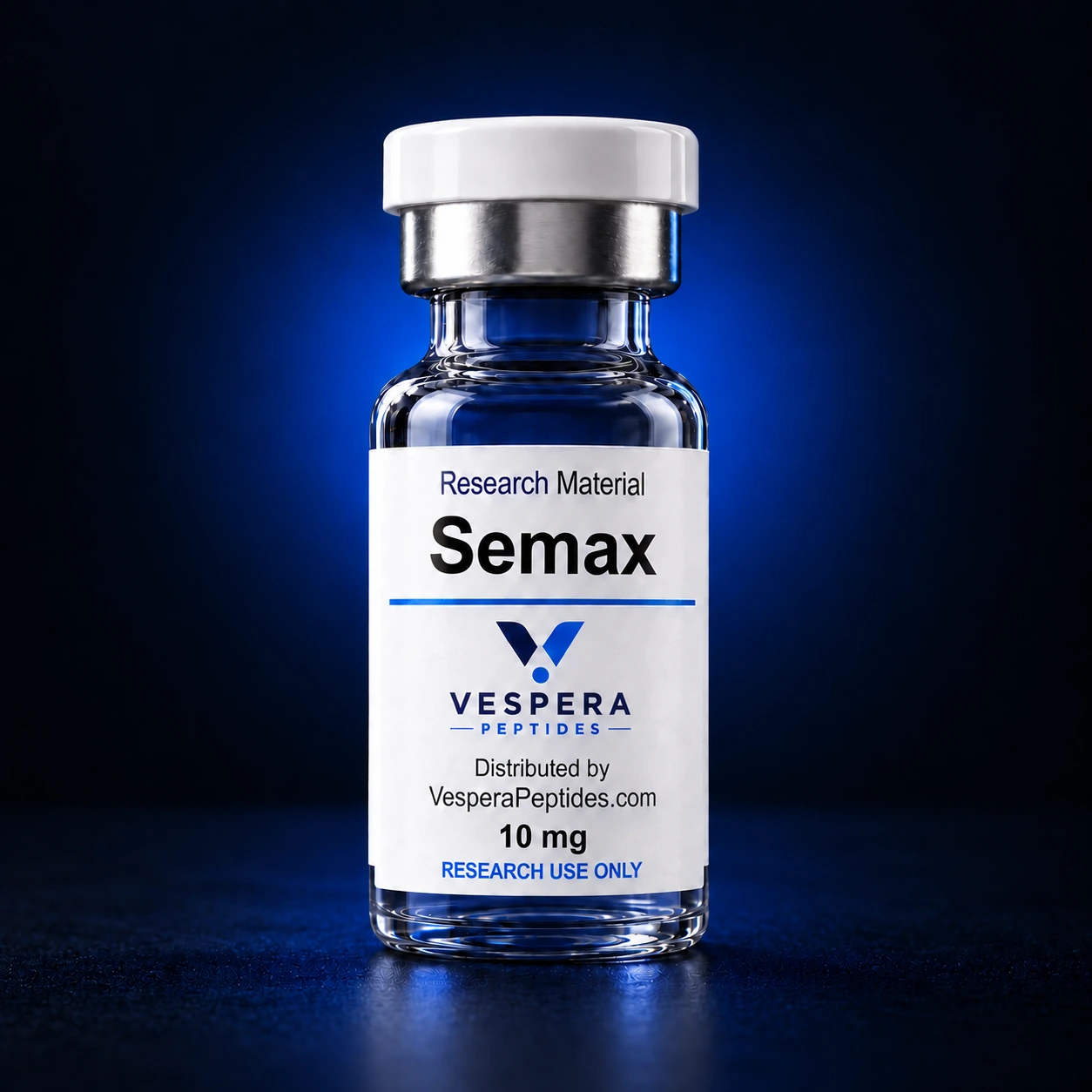
Semax
Synthetic ACTH(4–10)-derived heptapeptide
Semax is a seven-amino-acid synthetic analog derived from the ACTH(4–10) sequence. Laboratory studies have examined neurotrophin-related gene expression and signaling in rodent tissues and models.
- Identity shorthand
- MEHFPGP
- Evidence map
- Mechanistic and animal-model evidence
- Public page scope
- Identity and literature context; no purchase offer
Review the Semax catalog record for pricing, availability, and lot documentation. Orders remain subject to buyer and intended-use review.
Plain-language identity
What Semax is
Semax is a seven-amino-acid synthetic analog derived from the ACTH(4–10) sequence. Laboratory studies have examined neurotrophin-related gene expression and signaling in rodent tissues and models.
- Research class
- Synthetic ACTH(4–10)-derived heptapeptide
- Sequence / identity shorthand
MEHFPGP- Evidence map
- Mechanistic and animal-model evidence
Semax nomenclature can cover different chemical forms. Sequence, counter-ion, quantity, and lot-specific analytical results should be recorded rather than inferred from the short name.
What researchers examine
- BDNF, TrkB, and NGF-related expression in rodent brain and retinal tissues.
- Time-dependent transcriptional or protein changes in controlled neural model systems.
- The gap between mechanistic observations and claims about safety or outcomes.
How to read the evidence
- A 2006 rat study measured hippocampal BDNF protein, BDNF transcripts, and TrkB-related changes after Semax exposure.
- A 2010 rat study reported time- and tissue-dependent NGF and BDNF gene-expression changes.
- These studies describe measured changes in specific models; they do not establish personal-use benefits or a safe route of administration.
What this evidence does not establish
- Rodent gene-expression findings are not clinical evidence and should not be rewritten as consumer outcomes.
- FDA identifies immunogenicity and peptide-related impurity concerns for compounded drugs containing Semax.
- This Vespera item is a laboratory research material and is not an approved drug or compounded preparation.
Documentation checklist
- Match sequence/form, SKU, nominal quantity, lot, method, and result.
- Record the species, tissue, time point, and assay when comparing a lot to published research.
- Do not use one purity value as a substitute for identity, quantity, microbial, endotoxin, or stability data.
Primary and official sources
Links are provided for source review. A citation is not an endorsement of nonresearch use.
- Dolotov et al. — Semax, BDNF, and TrkB expression in rat hippocampus (2006)Rodent molecular-signaling study.
- Shadrina et al. — NGF and BDNF expression dynamics under Semax (2010)Rodent brain and retina gene-expression study.
- FDA — bulk substances that may present significant safety risksRegulatory context for compounded drugs containing Semax.