
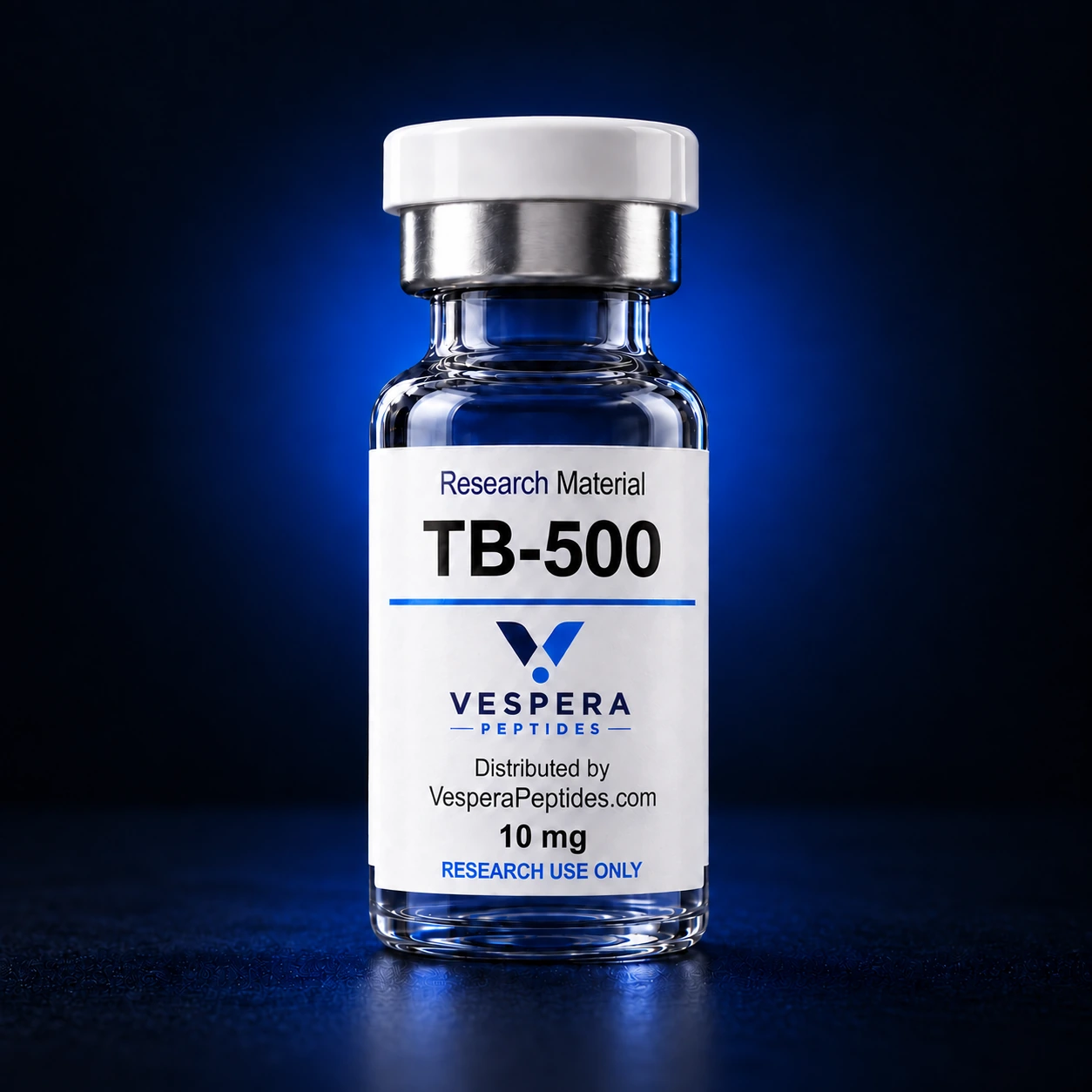
Research material profile
TB-500
Thymosin-β4 fragment research peptide
TB-500 is used in current FDA materials for the N-acetylated seven-amino-acid sequence LKKTETQ, a fragment corresponding to residues 17–23 of full-length thymosin β4.
- Identity shorthand
- Ac-LKKTETQ
- Evidence map
- Identity-sensitive preclinical evidence
- Public page scope
- Identity and literature context; no purchase offer
Pricing, availability, ordering, cart, and checkout remain inside the reviewed qualified-access portal.
Plain-language identity
What TB-500 is
TB-500 is used in current FDA materials for the N-acetylated seven-amino-acid sequence LKKTETQ, a fragment corresponding to residues 17–23 of full-length thymosin β4.
- Research class
- Thymosin-β4 fragment research peptide
- Sequence / identity shorthand
Ac-LKKTETQ- Evidence map
- Identity-sensitive preclinical evidence
“TB-500,” “TB4,” full-length thymosin β4, and the LKKTETQ fragment are not interchangeable names. A lot record must identify which molecular species was actually analyzed.
What researchers examine
- Actin-binding-domain behavior and cell migration in controlled model systems.
- Endothelial sprouting, matrix remodeling, and repair-associated assays.
- Differences between full-length thymosin β4 literature and fragment-specific experiments.
How to read the evidence
- A 2003 study linked the central actin-binding motif of thymosin β4 to endothelial migration and sprouting assays.
- A separate 2003 animal study evaluated full-length thymosin β4 and the LKKTETQ fragment in wound-repair models.
- Results obtained with full-length thymosin β4 cannot automatically be assigned to a shorter fragment or to a catalog item with an unverified sequence.
What this evidence does not establish
- Published repair-related findings are largely cellular or animal-model observations and are not personal-use guidance.
- Identity ambiguity is a central interpretation risk; the lot-specific sequence and form must be confirmed.
- This Vespera record makes no claim of clinical safety, efficacy, sterility, or suitability for administration.
Documentation checklist
- Confirm whether the specification identifies the seven-residue fragment, full-length thymosin β4, or another related material.
- Match sequence/form, SKU, strength, lot, method, and reported mass or purity information.
- Keep literature on full-length and fragment materials separated in the research record.
Primary and official sources
Links are provided for source review. A citation is not an endorsement of nonresearch use.
- FDA briefing document — TB-500-related bulk drug substances (2026)Identity discussion distinguishing TB-500 from full-length thymosin β4.
- Malinda et al. — thymosin β4 actin-binding site and angiogenesis assays (2003)Cell migration and vessel-sprouting model systems.
- Philp et al. — thymosin β4 and LKKTETQ in animal wound models (2003)Animal-model study; not evidence of human use.