Research material profile
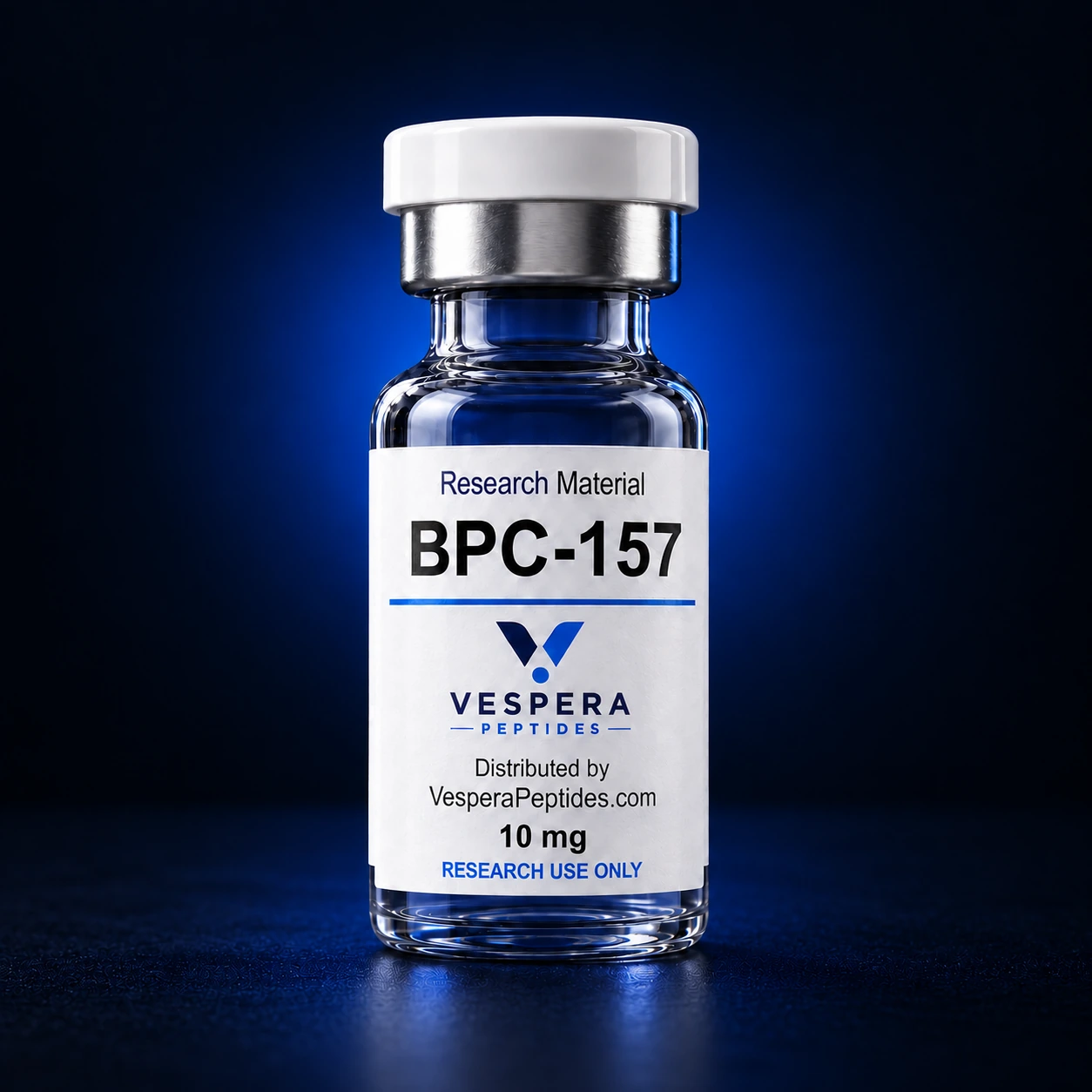
BPC-157
Synthetic pentadecapeptide
BPC-157 is a 15-amino-acid research peptide. Published work has mostly used isolated cells, tissues, and animal models to study vascular signaling and repair-related processes.
- Identity shorthand
- GEPPPGKPADDAGLV
- Evidence map
- Preclinical-dominant evidence
- Public page scope
- Identity and literature context; no purchase offer
Pricing, availability, ordering, cart, and checkout remain inside the reviewed qualified-access portal.
Plain-language identity
What BPC-157 is
BPC-157 is a 15-amino-acid research peptide. Published work has mostly used isolated cells, tissues, and animal models to study vascular signaling and repair-related processes.
- Research class
- Synthetic pentadecapeptide
- Sequence / identity shorthand
GEPPPGKPADDAGLV- Evidence map
- Preclinical-dominant evidence
The short name “BPC-157” does not establish salt form, counter-ion, purity, or peptide-related impurities. Those details belong in a lot-specific specification or analytical record.
What researchers examine
- Endothelial signaling and nitric-oxide-associated vascular responses in cell, tissue, and animal models.
- VEGFR2-associated signaling, endothelial migration, and tube-formation assays.
- How peptide identity, impurities, and experimental system affect reproducibility across studies.
How to read the evidence
- A 2017 study reported VEGFR2-associated effects in endothelial assays and a rat hind-limb ischemia model.
- A 2026 ex vivo study used discarded human internal mammary artery rings; it was a tissue experiment, not a clinical safety or efficacy trial.
- Model-specific findings should be described as observations in those systems, not as established outcomes in people or animals.
What this evidence does not establish
- The public literature does not establish this Vespera catalog material as safe, effective, sterile, or suitable for administration.
- FDA identifies limited safety information and peptide-impurity and characterization concerns for compounded drugs containing BPC-157.
- A research-use label is meaningful only when buyer qualification, access control, fulfillment review, and actual use remain research-only.
Documentation checklist
- Match the exact product name, selected strength, SKU, and lot or batch identifier.
- Review the stated analytical method, result, sample identity, and report date together.
- Do not treat a purity percentage alone as proof of sequence identity, quantity, sterility, or suitability for a particular experiment.
Primary and official sources
Links are provided for source review. A citation is not an endorsement of nonresearch use.
- Liu et al. — VEGFR2 activation and up-regulation in BPC-157 models (2017)Endothelial assays, chick membrane assay, and rat model.
- Yildirim et al. — vasorelaxant effects in human arterial rings (2026)Ex vivo human tissue study; not a clinical trial.
- FDA — bulk substances that may present significant safety risksRegulatory context for compounded drugs containing BPC-157.